


Saturday Night And Sunday Morning
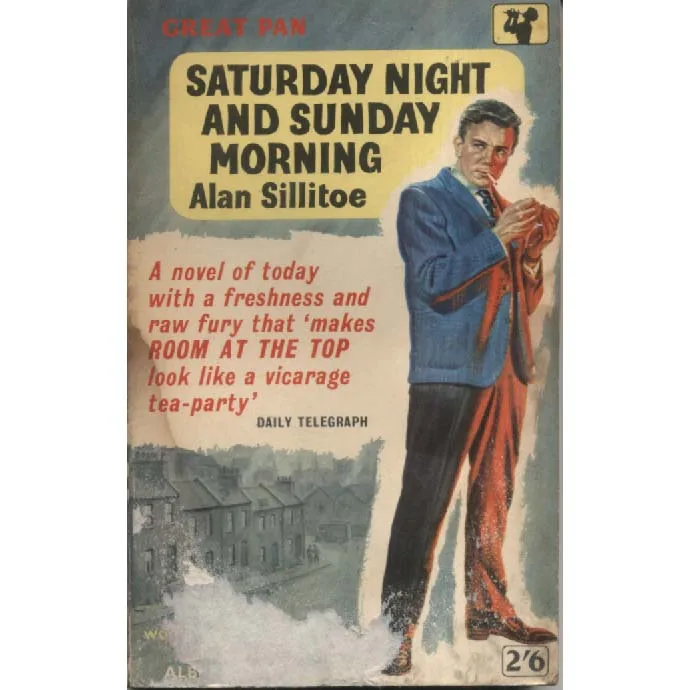
Publisher: Pan
Format: Paperback
ISBN: none
Saturday Night and Sunday Morning is the literary equivalent of cigarette smoke trapped in wallpaper. Loud, restless, sharp-edged and permanently slightly hungover, Alan Sillitoe’s 1960 working-class classic arrives here in Fair condition from the heroic salvage operation known as Crappy Old Books, carrying slight water damage but remaining structurally sound. Much like Britain itself, really.
This is the novel that helped define the angry young man era. Before kitchen-sink realism became a GCSE phrase muttered resentfully by teenagers, Sillitoe was already there documenting factory life, pubs, affairs, boredom, resentment and the determined pursuit of a good weekend in post-war Nottingham. Arthur Seaton barrels through the pages fuelled by beer, cynicism and the sort of industrial stamina modern office workers can barely comprehend.
The physical condition of this particular copy actually feels strangely appropriate. A pristine copy of Saturday Night and Sunday Morning would almost seem suspicious, as though it had been purchased for decorative purposes by somebody who keeps vintage hard hats in a Shoreditch coffee shop. Slight water damage, however, suggests authenticity. This book looks like it may genuinely have lived through several decades of northern weather, overcrowded bookshelves, tea spillages, and perhaps one dramatic incident involving a leaking windowsill in a bedsit sometime around 1978.
Fear not though: structurally sound. The literary equivalent of an old pub regular who wheezes ominously climbing the stairs but still somehow outlasts everybody else.
Pan paperbacks from this era possess a very particular charm too. The paper has likely browned into that familiar “vintage nicotine” hue beloved by second-hand bookshops everywhere. The spine may carry the subtle curvature of many committed readings or at least one prolonged stay stuffed into the pocket of a donkey jacket. Somewhere within the pages there is a strong possibility of finding an old bus ticket, an underlined existential sentence, or evidence that a previous owner fell asleep face-first somewhere around chapter six.
As a novel, it still crackles with energy. Sillitoe writes with an impatience that feels startlingly modern. There is humour throughout, but also that persistent undertow of frustration and trapped ambition that made the book so important in the first place. Everyone talks about the “anger” of this generation of writers, but what really lingers is the exhaustion. The sense of people working hard, drinking hard, and trying desperately not to think too much about Monday morning.
Today, the world it describes has largely vanished. Many of the factories are gone. The pubs are quieter. The wages are somehow both higher and worse. But the mood of wanting freedom while simultaneously suspecting the system has already won remains perfectly intact.
An essential slice of British literary history, slightly damp around the edges but still defiantly alive. Exactly the kind of book Crappy Old Books was born to rescue.
Keep browsing: See more Fiction books Other books by Alan Stillitoe
